SleeckOS Clips
I rebuilt an open-source video clipping prototype for an agency processing hundreds of uploads a day. The new system uses Postgres, Redis, local transcription, and background jobs that recover cleanly from failures and restarts.
- Role
- Sole engineer
- Client
- Sleeck
- When
- Apr — May 2026
What I started with
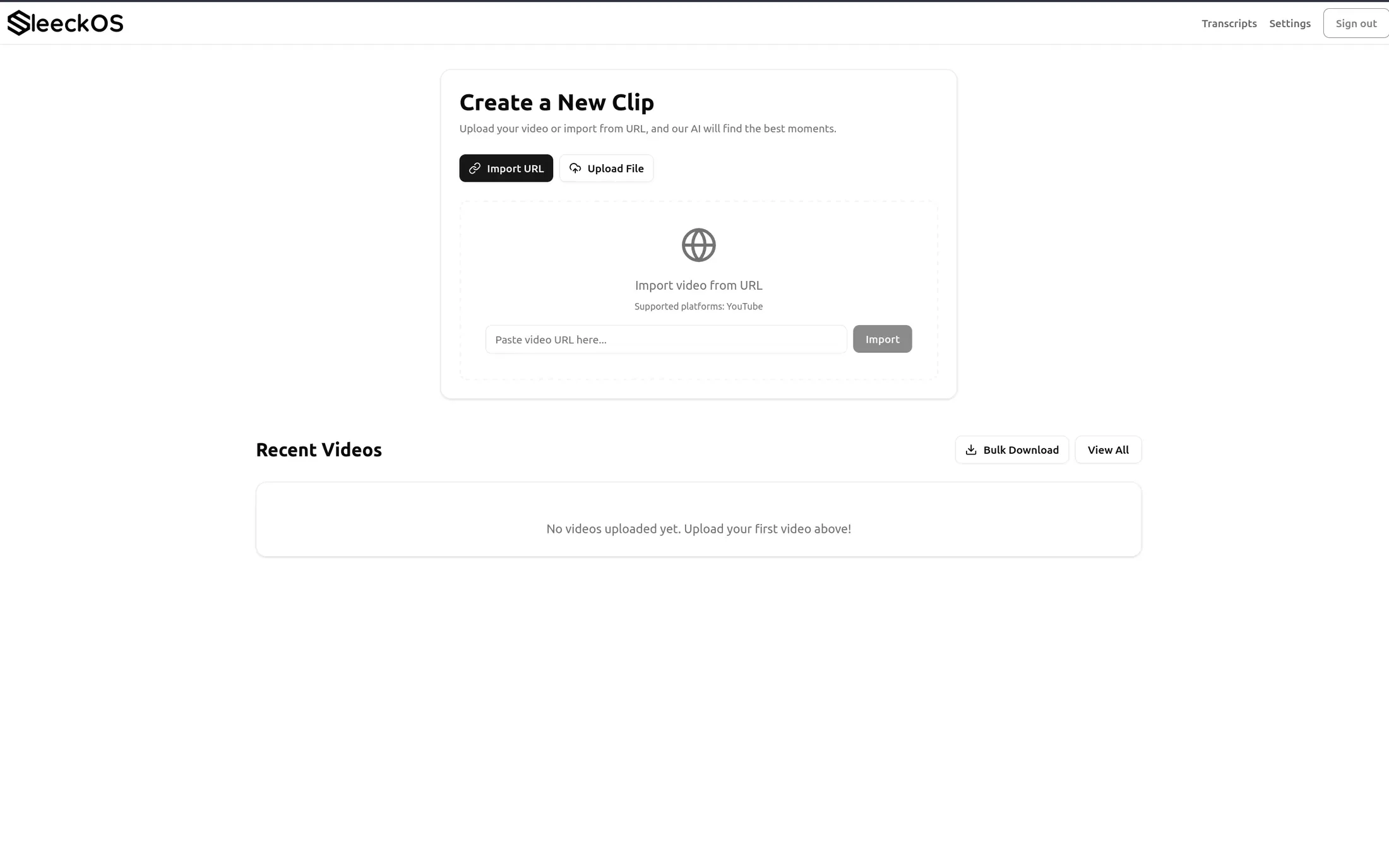
SleeckOS Clips began as Vinci Clips, an open-source tool designed to run on one person's machine. It could upload video, transcribe it with Gemini, suggest clips, and add basic captions. The core idea worked, but it was not ready for an agency processing hundreds of uploads a day. Authentication was limited, long-running jobs were fragile, and failures could leave media work in an unclear state.
Reworking the foundation
I moved the backend to Node 22, replaced MongoDB with Postgres and Prisma, and added Redis-backed sessions with admin user management. I also replaced Gemini transcription with faster-whisper running locally through CTranslate2. That gave us more control over costs and produced the word-level timestamps needed by the captioning and reframing tools.
Making jobs reliable
Video processing is slow and failures are unavoidable, so I moved the pipeline onto BullMQ queues. Imports, transcription, rendering, and Drive exports now report durable progress, support cancellation and retries, recover stalled work, and reconcile unfinished jobs after a restart.
Handling long videos
Long videos were another weak point in the original tool. I rebuilt the captioning and reframing flow to split large videos into manageable segments, process each segment, and merge them back into the final output. Long inputs could then move through the same workflow without becoming a special case.
Building out the product
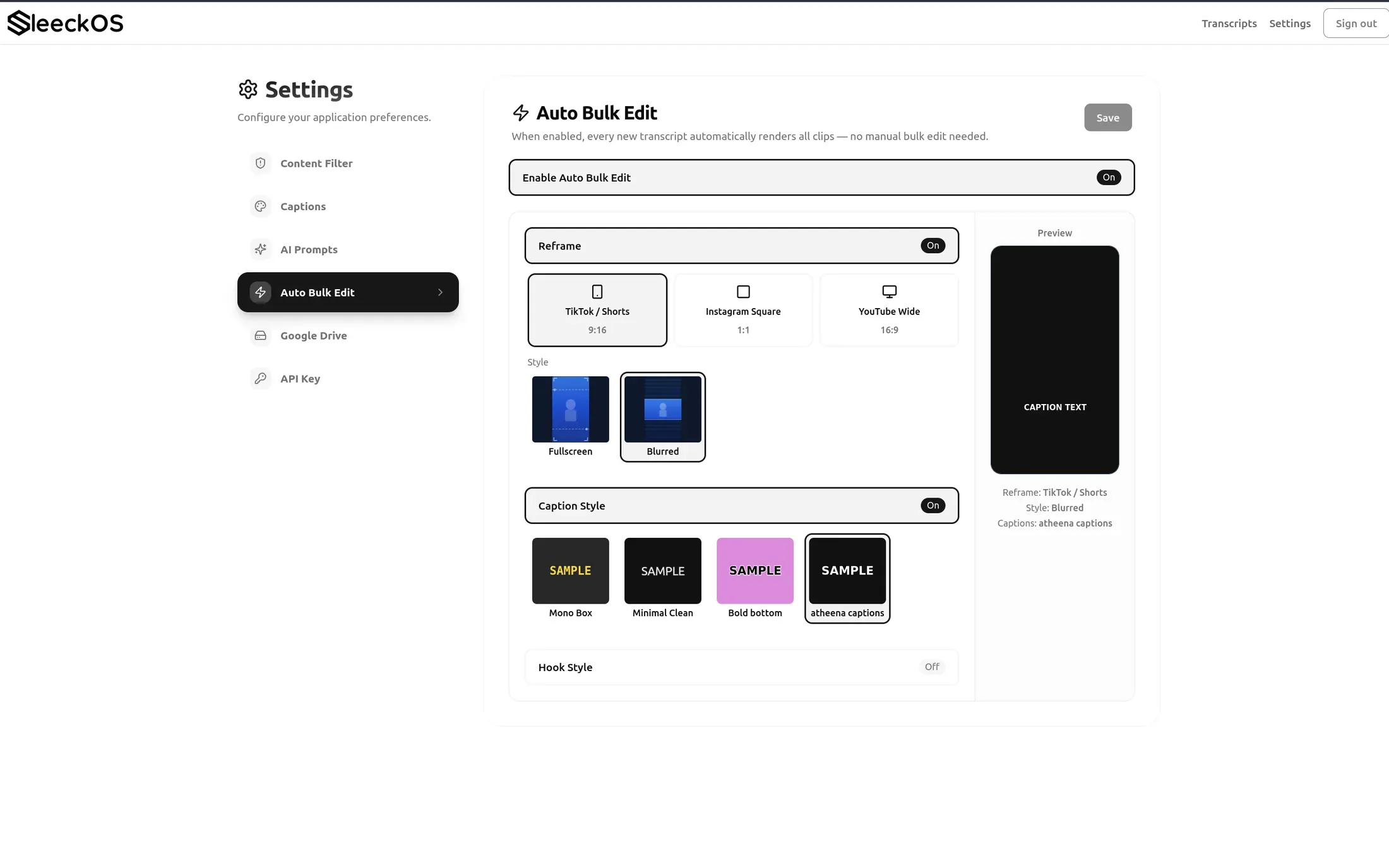
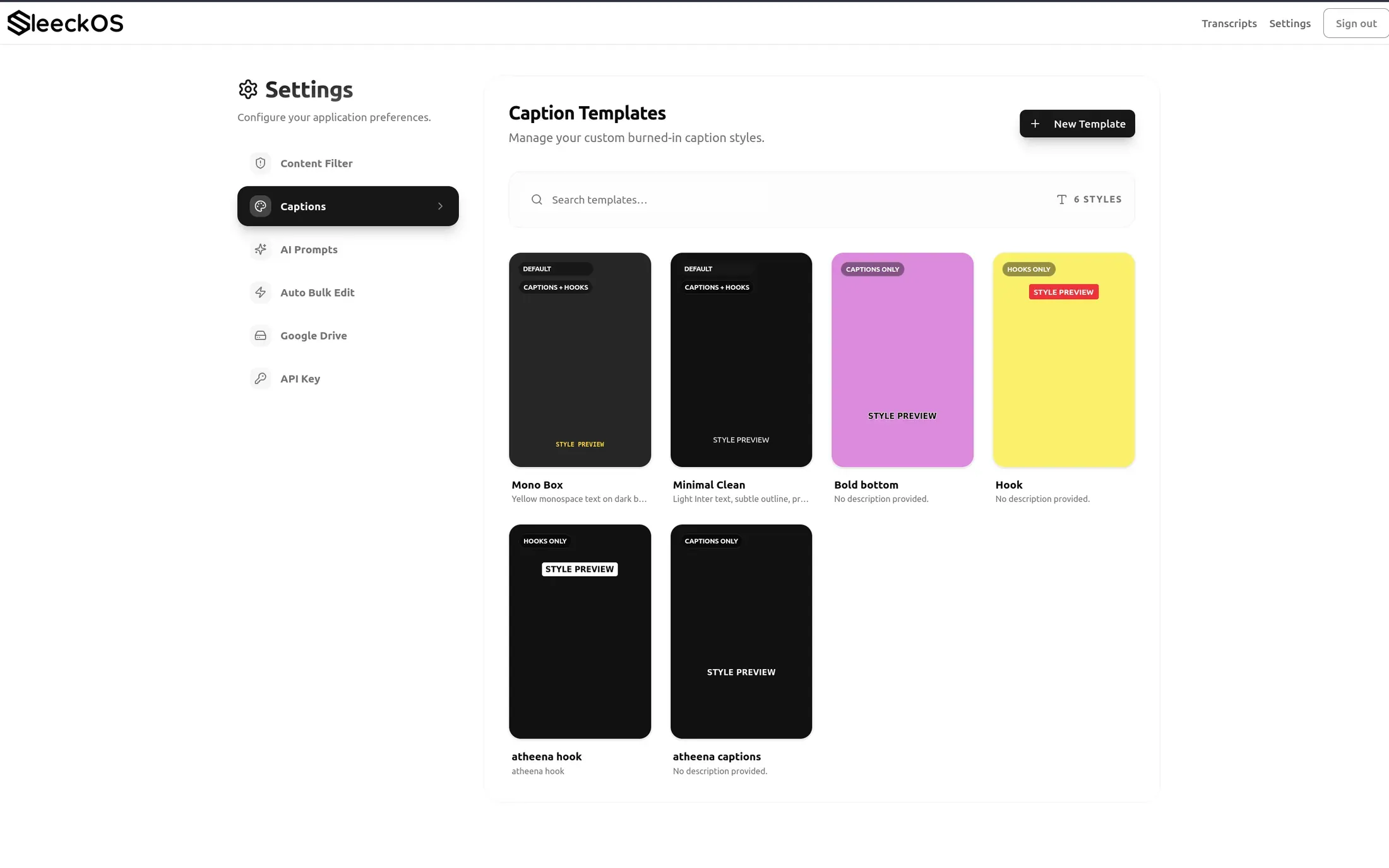
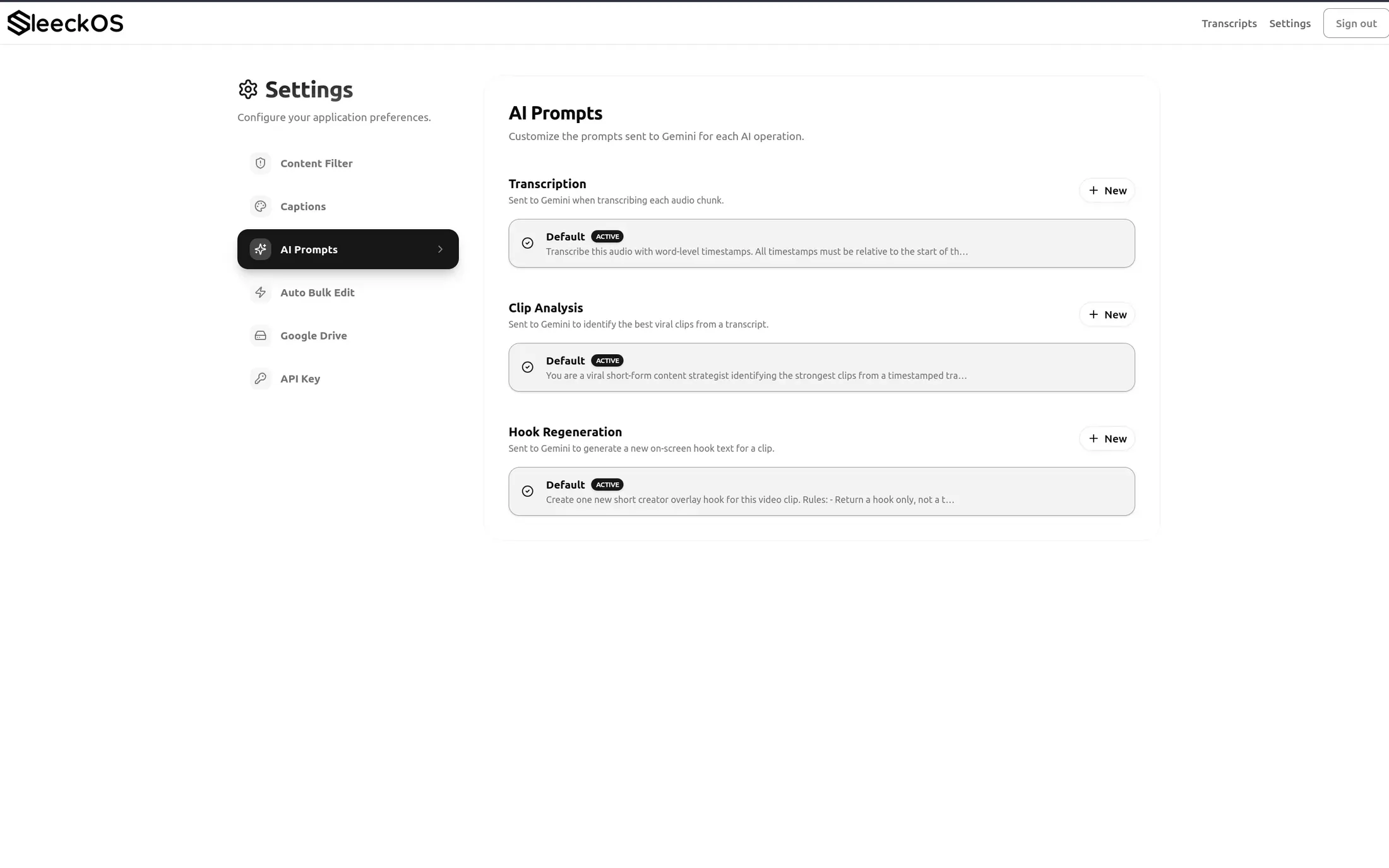
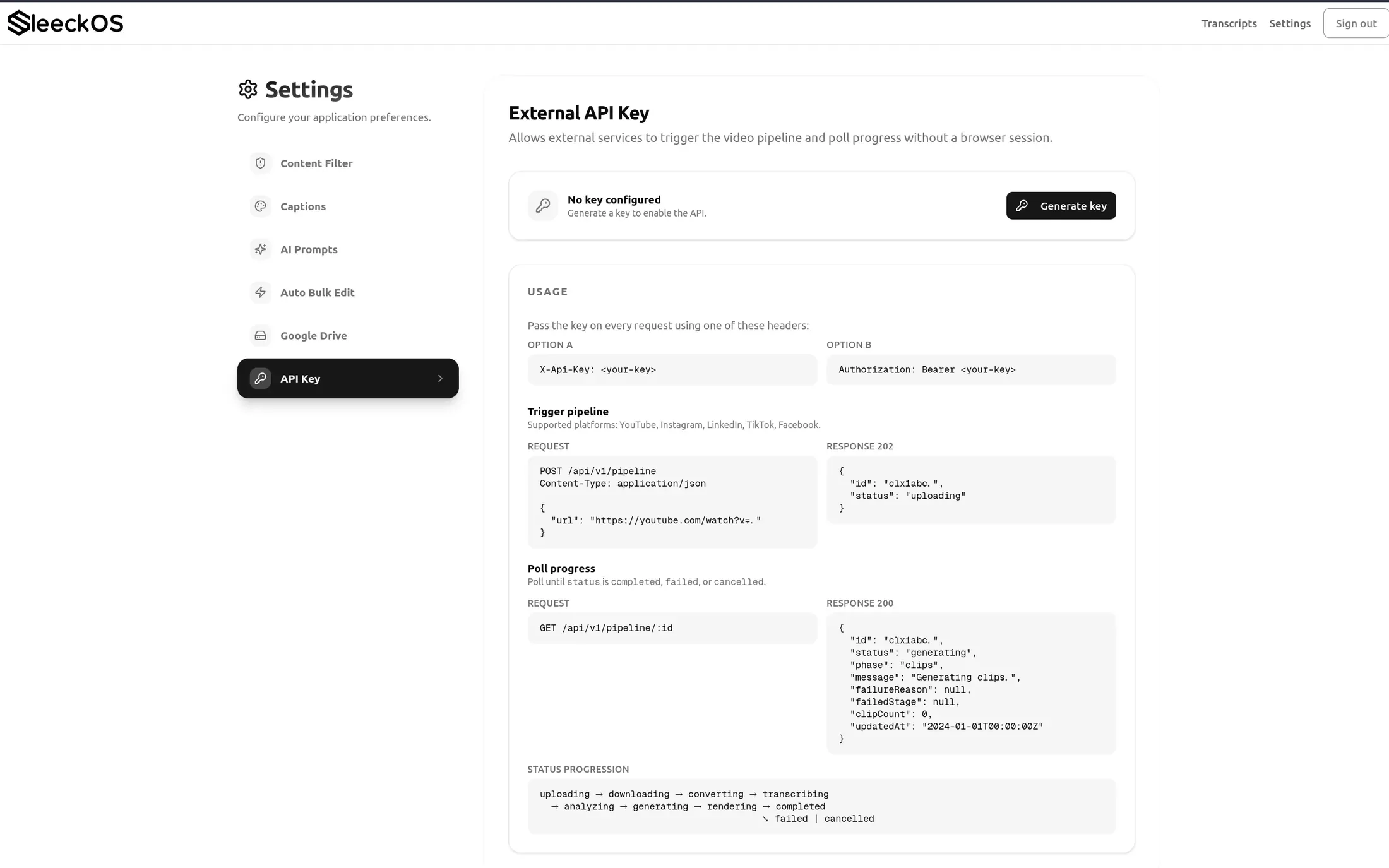
The editing workflow grew to include clip versioning, bulk editing, custom AI prompts, caption templates, smart reframing, previews, and Google Drive export. I added an API-key pipeline for automated accounts and automatic expiry for source and generated media. The application runs behind nginx with TLS and deploys through GitHub Actions.
Built with
- Node 22
- Postgres
- Prisma
- Redis
- BullMQ
- faster-whisper
- yt-dlp
- Docker
- nginx
- GitHub Actions
01 / 05